English
 Español
 عربى
عربى


Flat Washer Spring Lock Washer
Cat:Metal Washer
Flat washers and spring washers are fastener accessories widely used in industry...
See Details


Content
A maintenance engineer opens a drawing that specifies 3/8-16 bolts. The supplier asks one question before quoting: UNC or UNF? The answer determines whether the bolt threads into its nut, whether the joint carries the design load, and whether the shipment is usable at all. Bolt thread size is the most critical dimension in mechanical fastening, and it is also the most commonly misunderstood specification in industrial procurement. Every common bolt thread size belongs to one of two systems: the Unified Inch system used largely in North America, and the ISO Metric system used across the rest of the world. Buyers who understand the designation logic of both systems can prevent costly mismatches before parts ever reach the plant floor.
A bolt thread size designation carries two values: the nominal diameter of the thread, and the distance between adjacent threads. This definition is the foundation of every fastener specification, and it applies identically to inch and metric bolts.
Inch bolts express thread distance as threads per inch (TPI). A 1/4-20 bolt has a 1/4 inch major diameter and 20 threads in every inch of shank. Metric bolts express the same distance as pitch, measured from one crest to the next in millimeters. An M8x1.25 bolt has an 8 mm major diameter and a 1.25 mm pitch.
The practical consequence is that a 1/4-20 bolt will not mate with a 1/4-28 nut. Both share the same nominal diameter but have different thread spacing. Many buyers make exactly this mistake when they order by diameter alone or when they substitute an inch part for a metric part without checking pitch.
| System | Example designation | Nominal diameter | Thread distance |
| Inch UNC | 3/8-16 | 3/8 inch | 16 threads per inch |
| Inch UNF | 3/8-24 | 3/8 inch | 24 threads per inch |
| Metric coarse | M10x1.5 | 10 mm | 1.5 mm pitch |
| Metric fine | M10x1.25 | 10 mm | 1.25 mm pitch |
The most common inch bolt thread sizes are 1/4-20, 5/16-18, 3/8-16, 7/16-14, 1/2-13, 5/8-11, 3/4-10, and 1-8 in the UNC coarse series, with fine UNF counterparts at 28, 24, 24, 20, 20, 18, 16, and 12 TPI.
Inch threads remain the backbone of North American industrial assembly. The UNC coarse series is the default for structural and general mechanical work because it tolerates dirt, rust, and minor damage without seizing. The UNF fine series provides higher tensile strength and better vibration resistance, so it appears in automotive, aerospace, and precision equipment.
The Unified Thread Standard specifies 12 TPI for a 1-1/4 inch UNF bolt, but 14 TPI is far more common in actual use. This kind of practical deviation is why a bolt thread size chart alone is not enough: you need to verify against real stock or a reliable supplier.
| Nominal Size | UNC Coarse TPI | UNF Fine TPI | Typical Application |
| 1/4 inch | 20 | 28 | Enclosures, small brackets |
| 5/16 inch | 18 | 24 | Machinery guards |
| 3/8 inch | 16 | 24 | Conveyor frames, engine mounts |
| 7/16 inch | 14 | 20 | Automotive suspension |
| 1/2 inch | 13 | 20 | Structural steel, pumps |
| 5/8 inch | 11 | 18 | Bridge fittings, flanges |
| 3/4 inch | 10 | 16 | Heavy equipment, anchors |
| 1 inch | 8 | 12 | Large structural joints |
The most widely used metric bolt thread sizes are M6x1.0, M8x1.25, M10x1.5, M12x1.75, M16x2.0, and M20x2.5 in the metric coarse series, with fine variants such as M8x1.0, M10x1.25, and M12x1.5 common in precision and automotive assemblies.
Metric bolt sizes dominate global manufacturing outside North America. Their designation is unambiguous: the pitch tells you exactly how far the thread advances per revolution. A coarse M10x1.5 thread advances 1.5 mm per turn, while a fine M10x1.25 thread advances 1.25 mm and is stronger and more resistant to loosening.
Here is how the common metric sizes map to real applications:
| Nominal Size | Coarse Pitch | Fine Pitch | Typical Application |
| M6 | 1.0 mm | 0.75 mm | Electronics, light frames |
| M8 | 1.25 mm | 1.0 mm | Automotive, guards |
| M10 | 1.5 mm | 1.25 mm | Structural, pumps |
| M12 | 1.75 mm | 1.5 mm | Heavy machinery |
| M16 | 2.0 mm | 1.5 mm | Steel fabrication |
| M20 | 2.5 mm | 1.5 mm | Large equipment frames |
Coarse threads are the default choice for general engineering because they assemble faster, tolerate dirt and corrosion better, and reduce galling risk in stainless steel.
Fine threads are specified when vibration resistance, tensile strength, or precision adjustment matters more than assembly speed. The choice is never arbitrary: it follows the application load, the bolt material, and whether the joint will be disassembled frequently.
To measure a bolt thread size, use calipers to read the major diameter, then determine the pitch by measuring the thread crest distance in millimeters or counting threads per inch with a thread gauge.
Both values must be compared against a standard bolt thread size chart. Always take the measurement across the thread crests and avoid measuring on worn threads.
Inch external threads use a 2A tolerance class and internal threads use 2B, while metric external threads default to 6g and internal threads to 6H. These tolerance classes define the fit and are the most common for general-purpose fasteners.
The Unified National thread system defines Class 2A as suitable for most applications, which is why it is the default for commercial bolts and nuts. A tighter 3A/3B fit improves load distribution but demands clean, precise holes. The 2A/2B default also accommodates hot-dip galvanizing and plated bolts because the coating allowance is included.
During sourcing, match the material grade to the application. Inch structural bolts follow ASTM A307, A325, and A490 standards. Metric bolts follow ISO 898-1 property classes 8.8, 10.9, and 12.9. A 10.9 bolt requires a nut of the same property class; mixing a 10.9 bolt with an 8.8 nut can cause premature thread failure.
| Thread System | External Tolerance | Internal Tolerance | Typical Use |
| Unified Inch | 2A | 2B | Most general applications |
| Metric ISO | 6g | 6H | Most general applications |
| Unified Inch | 3A | 3B | Precision and plated bolts |
| Metric ISO | 4g | 5H | Precision fit applications |
New material and process technologies are continuously changing the bolt industry. Companies sourcing high-strength bolts should track bolt material and process upgrades before finalizing a supplier.
Ready to order with confidence? Contact an industrial fastener supplier with your thread size list for a quotation.
UNC (Unified National Coarse) and UNF (Unified National Fine) are the two standard thread series in the Unified Inch system. UNC has fewer threads per inch and a coarser profile. UNF has more threads per inch, a finer profile, and higher tensile strength. For a 1/2 inch bolt, UNC specifies 13 TPI and UNF specifies 20 TPI.
No. M8 has an 8 mm nominal diameter and a 1.25 mm pitch, while 5/16-18 has a 7.94 mm diameter and 18 threads per inch. They are not interchangeable because the thread profiles and pitch values differ. Always use a thread gauge or caliper before attempting substitution.
M10x1.5 identifies a metric bolt with a 10 mm nominal major diameter and a 1.5 mm thread pitch. The pitch is the distance from one thread crest to the next. The bolt advances 1.5 mm along its axis for every full rotation.
For structural steel in North America, use inch coarse bolts in sizes 1/2-13, 5/8-11, 3/4-10, or 1-8 depending on load. For metric projects, use M10x1.5, M12x1.75, or M16x2.0. Match the bolt to the strength grade specified by the engineer of record.
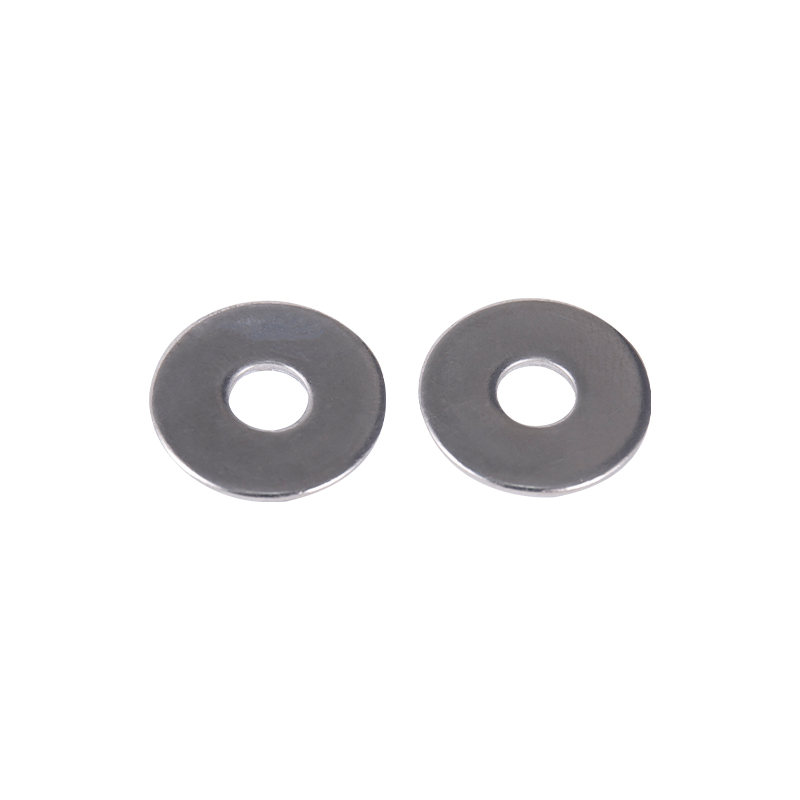
Flat washers and spring washers are fastener accessories widely used in industry...
See Details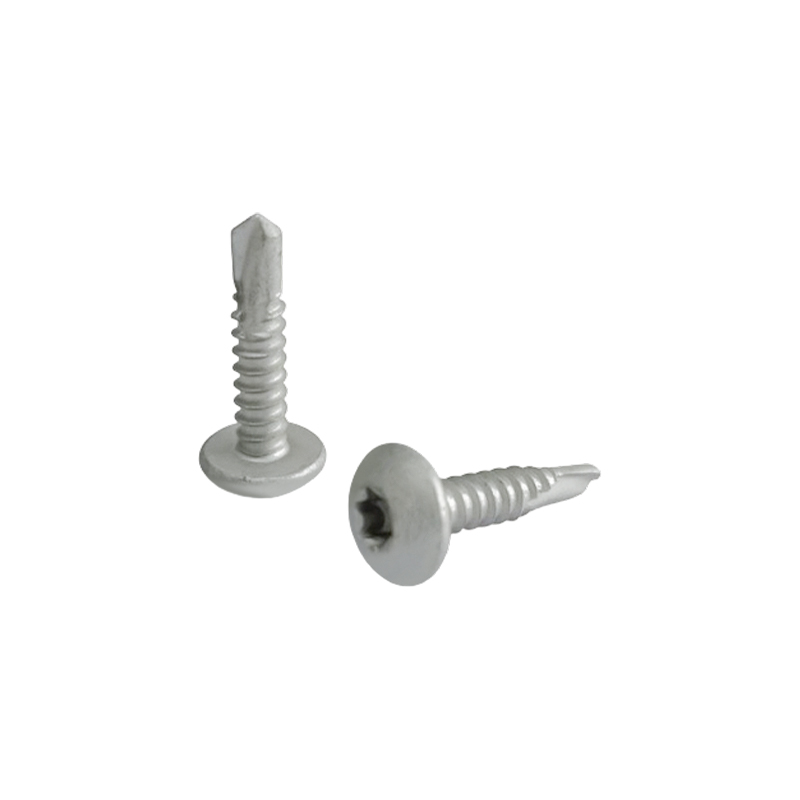
This Pan Head Hexalobular Self Drilling Screw features a specification of 12#-14...
See Details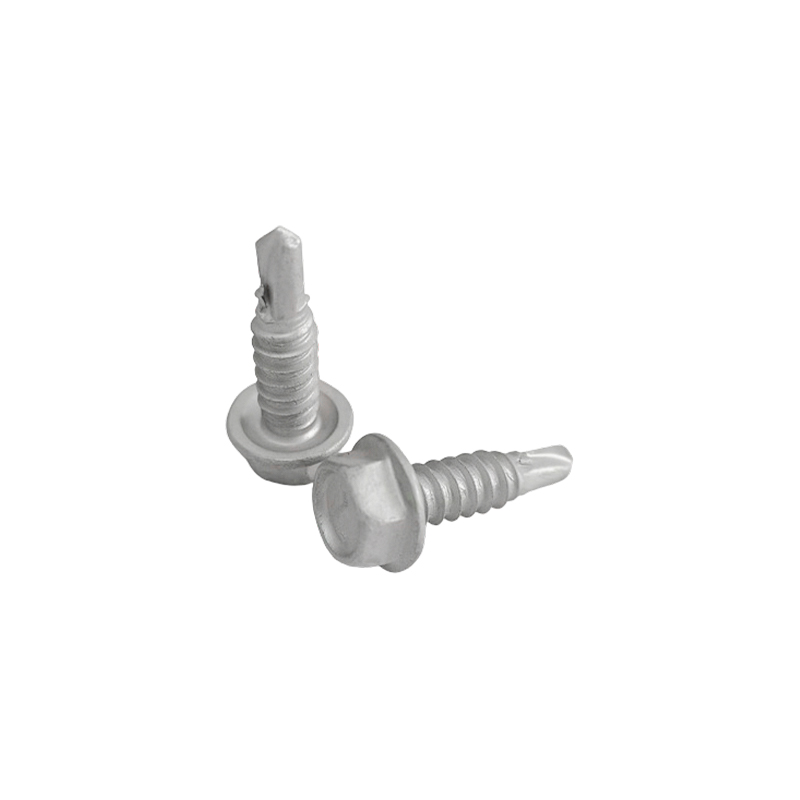
These hexagonal flanged stitching bolts are available in sizes from 1/4 to 14*7/...
See Details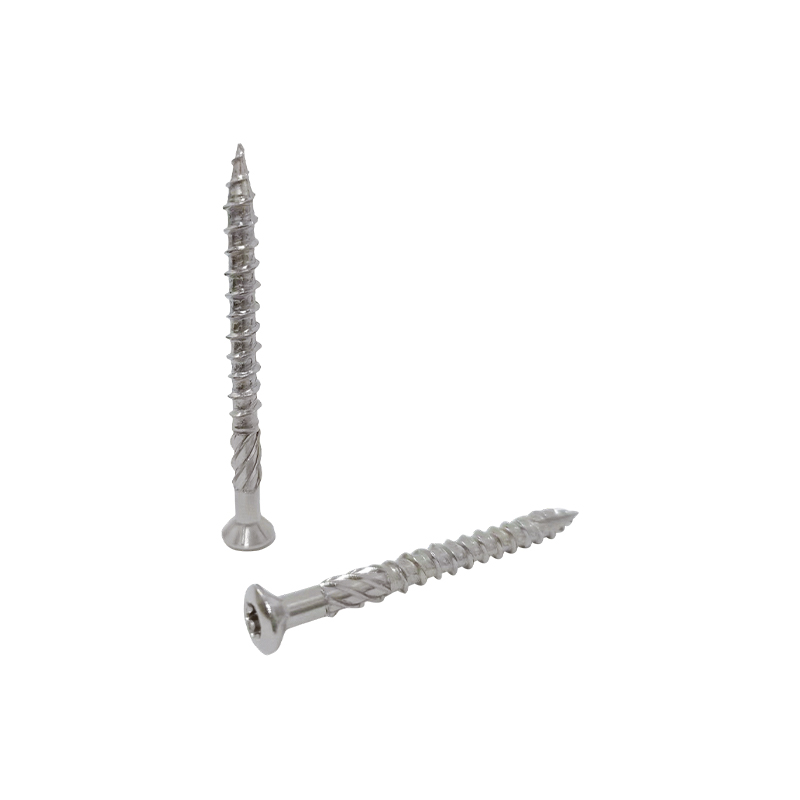
This Semi Countersunk Hexalabular Six-Bevel Rib Chipboard Screw features a speci...
See Details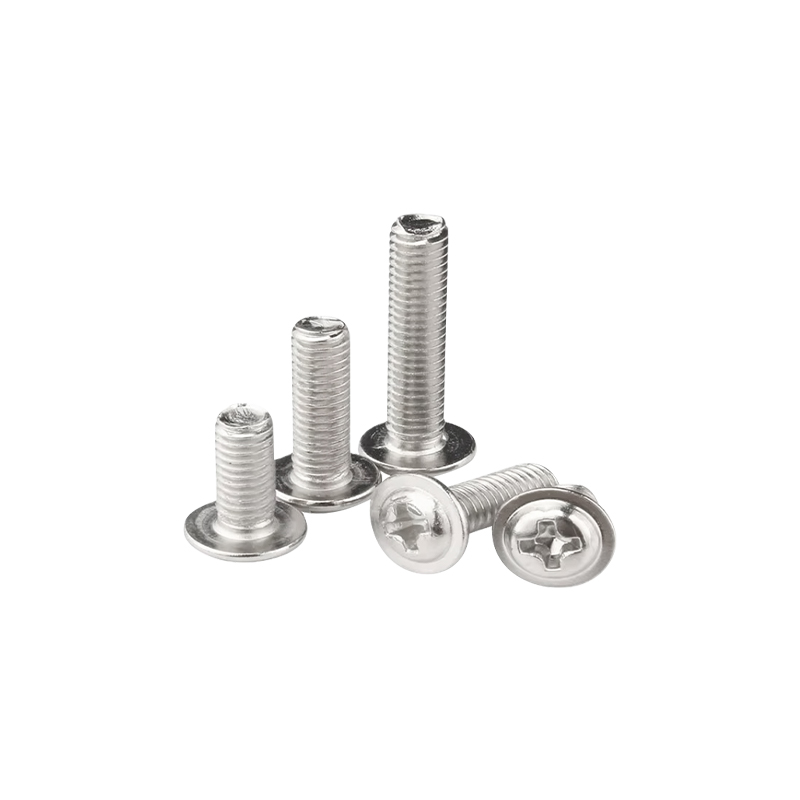
The Round Washer Head Phillips Machine Screw is a threaded fastener characterize...
See Details+86-13705735391
+86-18868359082
+86-573-83128088
+86-573-83128123
No. 2155, Shuanglong Road, Nanhu District, Jia Xing City, Zhejiang Province
Copyright © Jiaxing Zhongke Metal Technology Co.,Ltd. All Rights Reserved.Custom High Strength Stainless Steel Fasteners Manufacturers Provider