Get Touch
>>
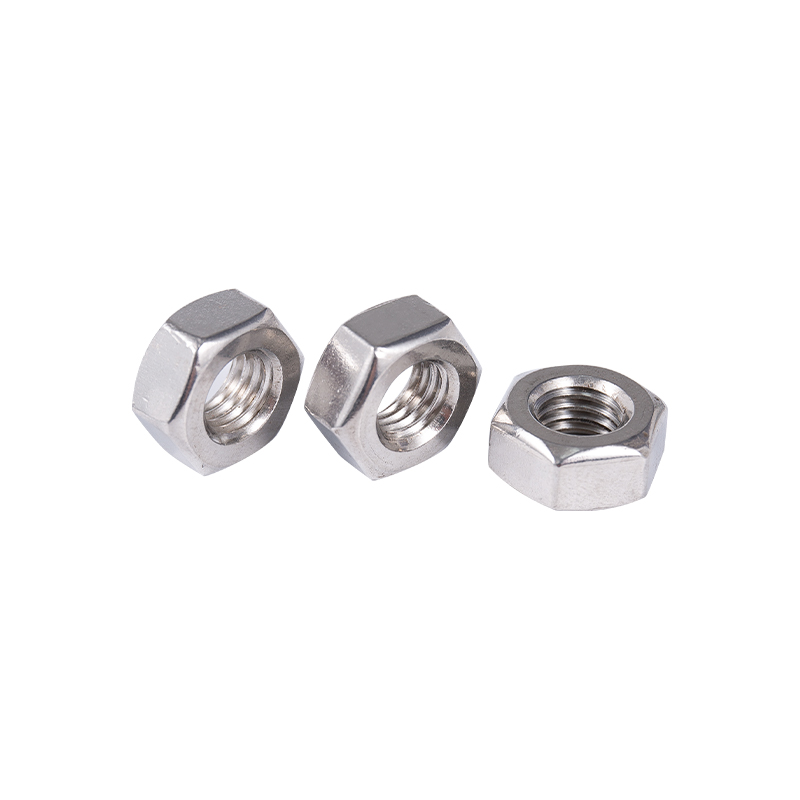
Nuts are internal threaded components used in conjunction with externally threaded fasteners such as bolts and screws, achieving connection and fixation through thread engagement.
Key features:
Removable, high-load-bearing capacity, and adjustable
Typical applications:
Steel structure beam-column connections (using high-strength 8.8-grade hex nuts + bolts)
Automotive engine block fixation (flange nuts + thread-locking adhesive), wheel installation (anti-theft nuts)
Circuit board mounting (nylon-insert nuts for insulation), equipment enclosure assembly (cap nuts for dust protection)
Demountable furniture connections (wing nuts), chandelier suspension (eye nuts)
Founded in
Covered area
Manufacturing equipment
Number of employees
Self-drilling and self-tapping screws are two of the most widely used fasteners in metal constructi...
View MoreA maintenance engineer opens a drawing that specifies 3/8-16 bolts. The supplier asks one question...
View MoreIntroduction In the world of sealing solutions, two terms often surface: Waterproof Washer and rubb...
View MoreInstalling stainless steel machine screws requires more precision than driving a standard carbon st...
View MoreWhen working with Stainless Steel Bolt assemblies, few experiences are as frustrating as a fastener...
View MoreOperating a ZKL-Box-Type Tempering Furnace requires a thorough understanding of both the equipme...
View MoreStainless steel nuts are essential fastening components designed to mate with bolts and threaded studs, providing secure clamping force and reliable joint integrity across diverse industrial applications. These precision-manufactured components feature internal threads that engage with external threads, creating a robust mechanical connection that withstands tension, shear, and vibration forces.
The selection of appropriate nut style, material grade, and dimensional specifications is critical to ensuring structural integrity and long-term performance in assemblies ranging from lightweight equipment to heavy infrastructure. Our manufacturing expertise, combined with advanced quality control processes, ensures that every nut meets rigorous international standards and customer-specific requirements.
Different nut configurations are engineered to address specific application requirements including load capacity, ease of installation, and resistance to loosening under vibration. The table below provides an overview of common nut types and their recommended applications.
| Nut Type | Thread Configuration | Key Features | Typical Applications | Advantages |
|---|---|---|---|---|
| Hex Nut | Standard internal threads | Six-sided, versatile design | General assembly, construction, machinery | Widely available, easy to install, standard torque |
| Nylon Insert Lock Nut | Standard internal with nylon ring | Friction locking mechanism | Vibration-prone assemblies, automotive, equipment | Reusable, excellent vibration resistance, no adhesives |
| Flange Nut | Standard with integrated washer | Built-in load distribution surface | Pressure vessels, pipe flanges, structural connections | Eliminates separate washer, improved load distribution |
| Jam Nut | Thinner profile internal threads | Low profile, locking applications | Locking assemblies, adjustment applications, tight spaces | Space-saving design, effective locking when paired |
| Wing Nut | Standard internal threads | Hand-tightenable wing design | Frequent adjustments, quick assembly, light duty | Tool-free operation, quick installation and removal |
Stainless steel nuts are manufactured from various alloy grades, each selected for specific application requirements including corrosion resistance, mechanical strength, and temperature performance. Grade 304 provides excellent general-purpose corrosion resistance, making it suitable for most industrial and commercial applications. Grade 316 offers superior resistance to chlorides and acidic environments, ideal for marine, chemical, and food processing applications. For applications demanding exceptional strength, precipitation-hardening alloys and specialized grades are available.
Our manufacturing processes ensure consistent material properties through precise control of cold heading, thread rolling, and finishing operations. Each production batch undergoes comprehensive material testing and mechanical verification to ensure compliance with applicable standards including ASTM and ISO specifications.
Nuts are manufactured to precise thread standards that ensure compatibility with corresponding bolts and threaded studs. Unified Thread Standards (UTS) are commonly used for North American applications, while Metric ISO thread standards are preferred internationally. Both coarse and fine thread series are available to accommodate different engagement lengths and load requirements.
Our manufacturing facilities maintain stringent dimensional control through regular calibration of thread gauges and precision measurement equipment. Each production batch is verified against applicable standards to ensure proper thread fit, consistent engagement, and reliable torque-tension relationships essential for structural applications.
While stainless steel provides inherent corrosion resistance, surface finish quality influences performance in specific environments. Passivation is a critical process that removes free iron and surface contaminants, optimizing the passive oxide layer for maximum corrosion protection. Electropolishing provides enhanced surface smoothness, improving cleanability and aesthetic appearance.
Our quality control processes include regular salt spray testing and surface inspection to verify corrosion resistance and finish quality. Each shipment is accompanied by comprehensive documentation including material test reports, dimensional inspection records, and surface finish verification.
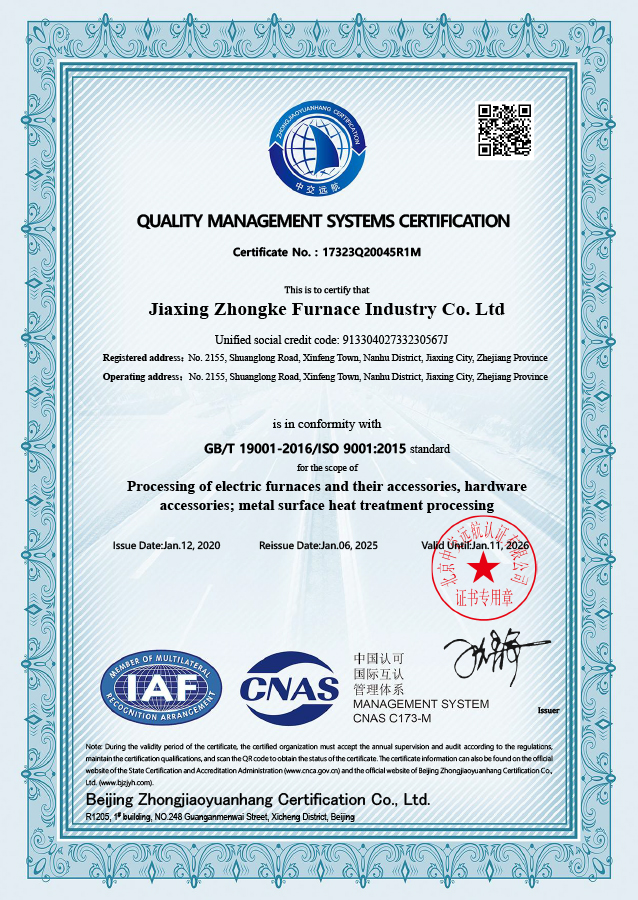
Quality consistency is fundamental to our manufacturing philosophy. Our comprehensive quality management system incorporates in-process inspections at every stage of production, from incoming raw material verification through final packaging. Mechanical property verification includes torque testing, hardness measurement, and dimensional inspection to ensure performance consistency and compliance with international standards.
Each production batch is assigned a unique traceability code linking it to raw material certificates, process parameters, and inspection records. This complete traceability enables prompt issue resolution and continuous quality improvement, reflecting our commitment to manufacturing excellence for export markets.
Jiaxing Zhongke Metal Technology Co., Ltd. combines decades of metallurgical expertise with precision manufacturing capabilities to produce stainless steel nuts that deliver consistent, reliable performance across critical applications. Our comprehensive approach, from material selection through final verification, ensures that every component meets the rigorous quality standards required for successful export to global markets.
+86-13705735391
+86-18868359082
+86-573-83128088
+86-573-83128123
No. 2155, Shuanglong Road, Nanhu District, Jia Xing City, Zhejiang Province
Copyright © Jiaxing Zhongke Metal Technology Co.,Ltd. All Rights Reserved. Custom SS Stainless Steel Nuts Manufacturers, Factory

 English
 Español
 عربى
عربى