English
 Español
 عربى
عربى


Pan Head Self-Drilling Screws
Cat:Self Drilling Screws
Pan Head Self-Drilling Screws are a type of fastener widely used in construction...
See Details


Content
Two self-tapping screws can look almost identical in a bin and still behave in completely different ways on an assembly line. The difference usually starts at the tail, the end of the shank opposite the head. A flat tail screw finishes with a blunt, chamfered face, while a sharp tail screw finishes with a tapered point. That single geometric choice decides whether a pilot hole is required, how quickly the screw starts, and how much driving torque the joint absorbs before something fails.
Geometry, however, only tells half the story. The material behind the tip, together with the heat treatment applied to it, decides whether the threads form cleanly in the substrate or strip it.
In fastener terminology the tail is the terminal end of the shank, and it governs how the screw enters a workpiece.
Because a sharp tail point is tapered, its first threads are incomplete and deepen progressively as the screw advances. A flat tail screw carries more complete threads closer to the end of the shank, which changes both load distribution along the engaged length and the shape of the driving torque curve.
Carbon steel grades such as C1022A are usually case hardened: the surface is carburized to a high hardness so it can cut or form a thread, while the core stays softer and tougher so the screw does not snap under torque. The gap between surface hardness and core hardness is what makes a small screw both aggressive and durable.
Stainless steel options behave differently and are frequently misunderstood:
The distinction matters most at a sharp tip. That point has a very small cross section, so an over-hardened or under-tempered point can fracture during driving, while an under-hardened point simply folds over and refuses to start. Flat tail screws spread driving stress over a wider area, but their long thread engagement means case depth must remain consistent along the entire threaded length.
Key point
Tip geometry defines how the screw enters the material. Material grade and case depth define whether it survives the process.
A flat tail screw is a controlled-engagement fastener. Because it cannot pierce the workpiece, hole diameter and hole quality define the thread-forming conditions. In sheet metal the hole is normally punched or drilled slightly under the nominal thread size, and the screw rolls or cuts its own thread in the wall of that hole. In plastics and die castings, a moulded core hole achieves the same result.
The consequences are predictable: starting torque is higher because the full thread profile engages immediately, engagement length is easy to control, and joints can be disassembled and reassembled with far less damage than a sharp point would cause. Flat tail screws are also the natural choice when the screw passes through a first panel and must form a thread in a nut, a boss or a thicker second layer.
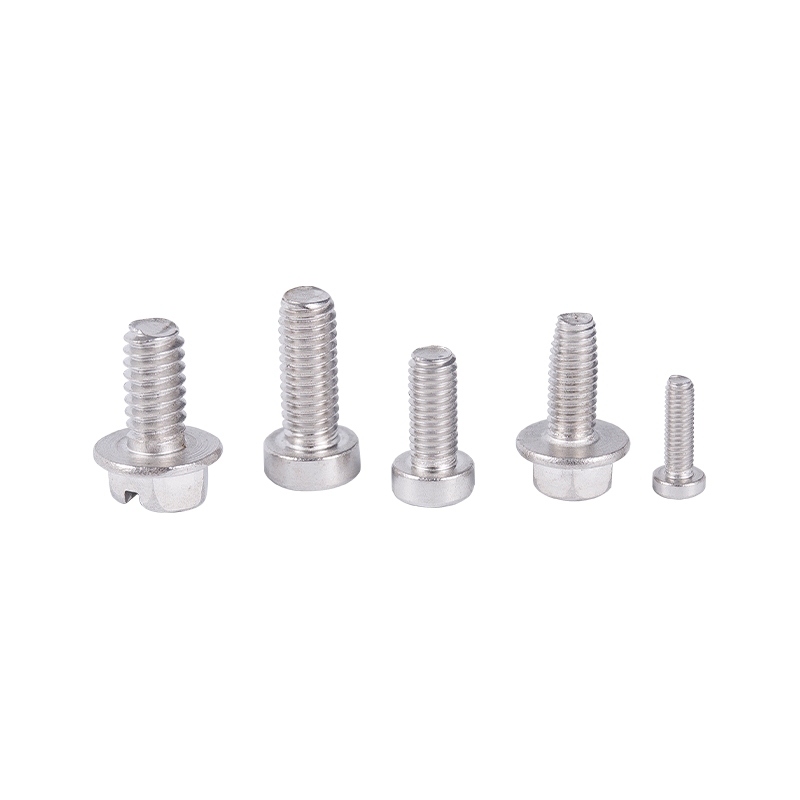 Flat Tail Self-Tapping Screws for Metal and Blind HolesBlunt flat tail suits pre-drilled metal, blind holes and bottoming work, with flat or pan heads and carbon or stainless steel options.View Product →
A sharp tail screw trades control for speed. The point locates itself, pushes material aside and pulls the first threads into contact, so no separate drilling operation is needed in wood, particleboard, thin sheet and many plastics. The trade-off is that the substrate must accept the displaced material. In dense hardwood or thick steel the point has nowhere to move material and driving torque rises sharply.
Sharp point designs also concentrate stress, because the tapered tip carries less material and thread-forming loads converge on a small volume of hardened steel. That is where case depth control becomes critical: too shallow a case and the point deforms, too brittle a case and the point chips.
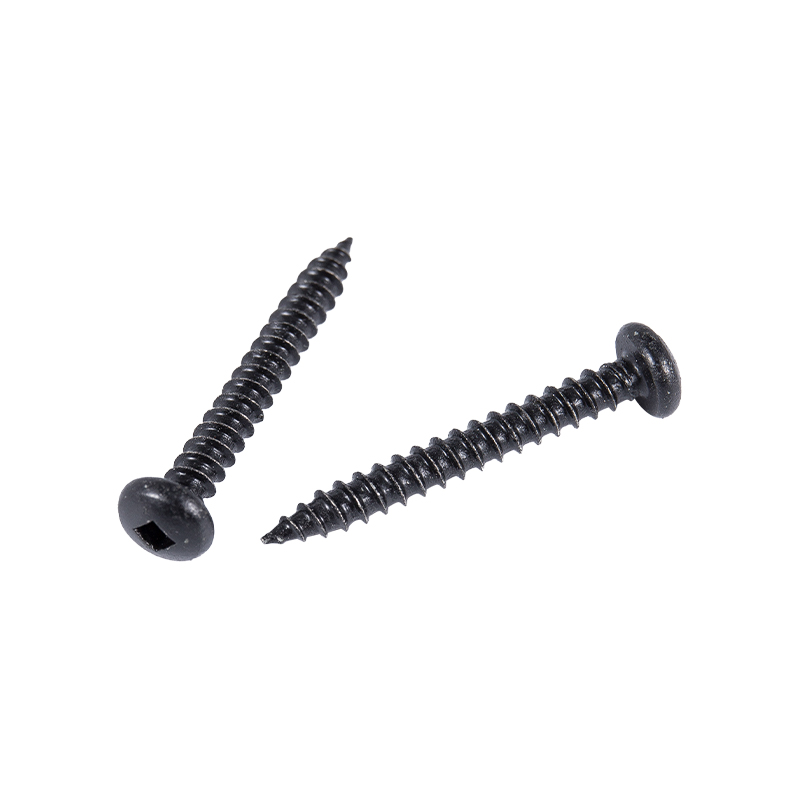 Pan Head Sharp Point Self-Tapping ScrewsIdeal for pre-drilled metal assemblies, these cross-recessed pan head screws cut threads and distribute clamping force across construction, furniture and equipment enclosures.View Product →
The table below summarises the differences that matter most during specification work.
| Feature | Flat tail | Sharp tail |
|---|---|---|
| End geometry | Blunt, chamfered face | Conical tapered point |
| Pilot hole | Required, diameter controlled | Usually not required |
| Starting behaviour | Needs a located hole | Self-starting point |
| Thread engagement | Complete threads near the end | Incomplete threads at the tip |
| Typical substrates | Sheet metal, plastics, die castings, bosses | Wood, particleboard, thin sheet, plastics |
| Case depth demand | Uniform along the whole thread | Tight control at the point |
| Removal and reuse | Better, less substrate damage | More substrate damage |
Thread-forming performance is a heat treatment outcome as much as a design outcome. Carburizing creates the hard surface layer, quenching locks in the transformation, and tempering restores enough core toughness to survive installation torque. Case depth, surface hardness and core hardness must all be held inside a window, and that window is easiest to hold when furnace atmosphere and temperature profile repeat from batch to batch.
Process equipment therefore sits directly behind fastener quality. Controlled-atmosphere carburizing and tempering furnaces from a properly specified range of heat treatment equipment keep case depth uniform across a production lot rather than only in a sample. Hardness surveys and salt spray testing then confirm that the surface layer behaves as intended in service.
The material decision should follow the substrate, not the other way round.
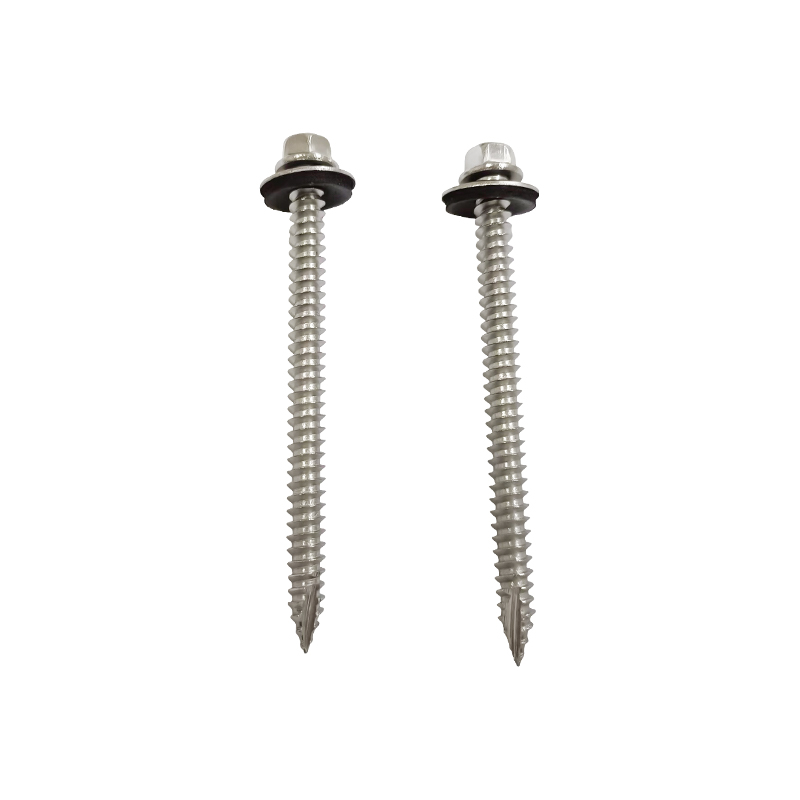 Hex Washer Head Type 17 Self-Tapping Screw with EPDM WasherFor outdoor metal roofing and cladding, this SUS410 screw uses a buttress thread and sealing washer to improve engagement and resist moisture ingress.View Product →
| Failure mode | Likely material cause | Practical correction |
|---|---|---|
| Thread stripped in the substrate | Pilot hole too large, or case depth too shallow | Reduce hole diameter, verify surface hardness |
| Point fractures during driving | Excessive case depth or insufficient tempering | Recheck the carburizing cycle and tempering temperature |
| Point folds over and the screw spins | Surface hardness too low for the substrate | Increase case depth or select a harder grade |
| Galling and seizing in stainless | Austenitic grade combined with high friction | Switch to SUS410 or apply a suitable lubricant |
| Rust appearing around the head | Carbon steel with inadequate plating | Upgrade to a stainless grade for the environment |
No. A sharp tail screw can start in a plain hole, but a flat tail screw needs a prepared hole of the correct diameter. Driving a flat tail screw without a pilot hole usually deforms the workpiece instead of forming a thread.
In metal and rigid plastics, yes. The hole is normally punched or drilled slightly below the nominal thread size so the screw has material to form against, and moulded core holes perform the same function in plastic parts.
Neither grade is universally better. Case hardened C1022A reaches a high surface hardness at low cost. SUS410 offers comparable hardness with better corrosion resistance, which matters in damp or mildly corrosive service.
Austenitic grades such as SUS304 and SUS316 cannot be hardened by heat treatment, so their threads are softer than case hardened carbon steel. Higher friction also encourages galling, which raises the risk of a stripped thread or a sheared screw.
The choice between a flat tail and a sharp tail self-tapping screw comes down to how the joint should form. A sharp tail optimises installation speed and self-starting capability, provided the substrate can accept displaced material and the point has the right case depth behind it. A flat tail optimises engagement quality, torque predictability and reusability, provided the hole is prepared correctly. In both cases, the grade and heat treatment behind the tip decide whether the design intent survives production.
For a wider view of how these fasteners are classified and applied, this overview of self-tapping screw types and selection is a useful companion read.
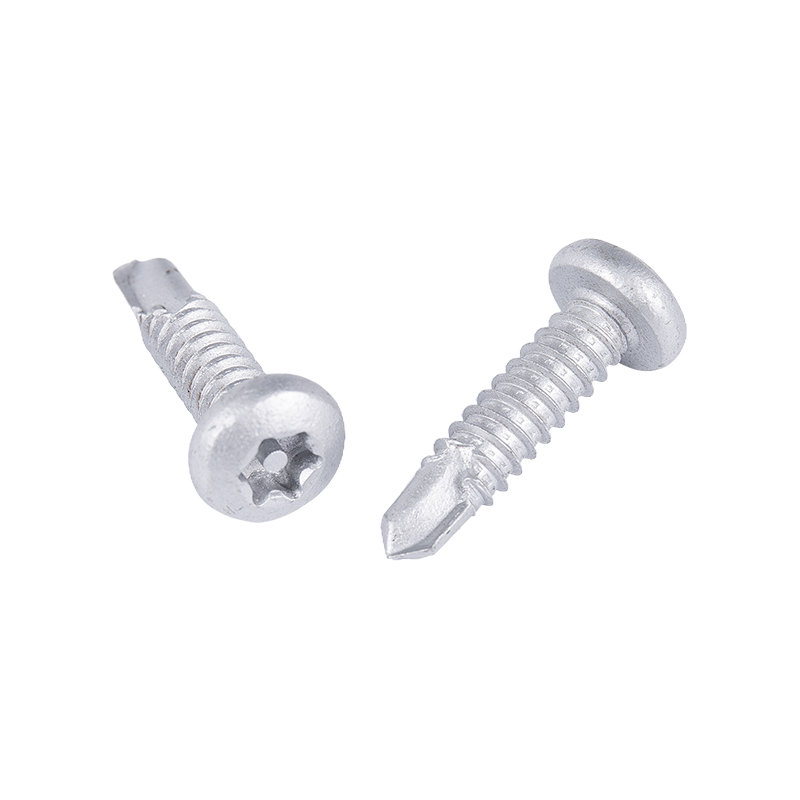
Pan Head Self-Drilling Screws are a type of fastener widely used in construction...
See Details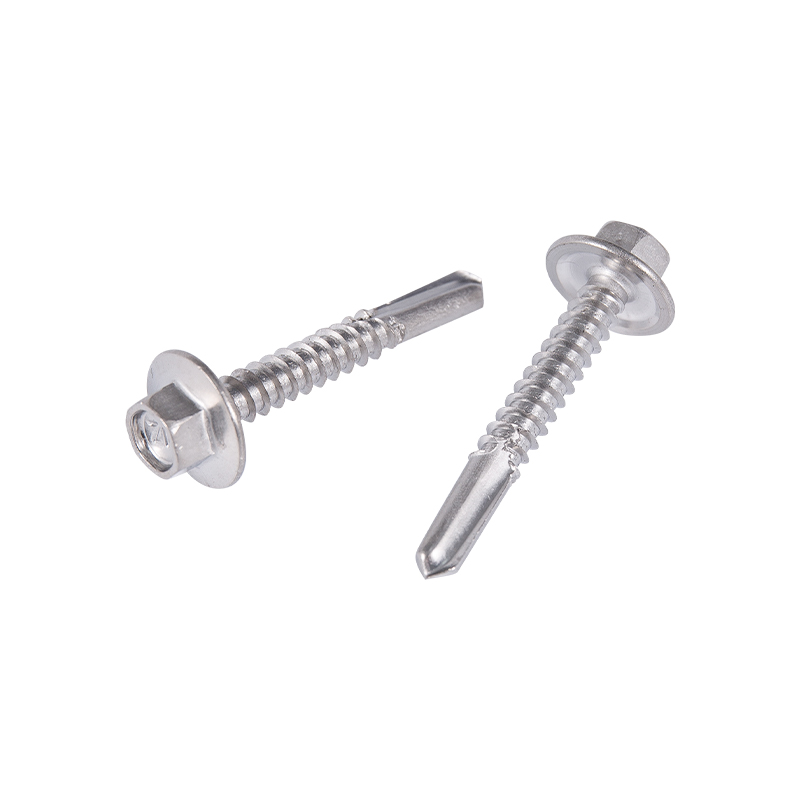
Hexagonal self-drilling screws are an efficient and convenient fastener. This ty...
See Details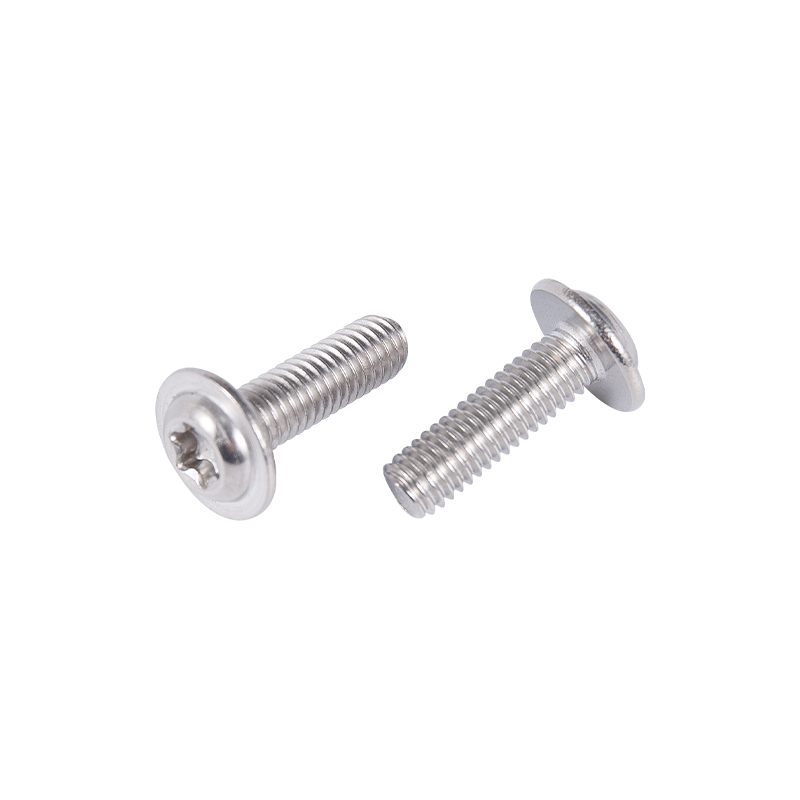
Pan head machine screws are well designed and have superior performance, suitabl...
See Details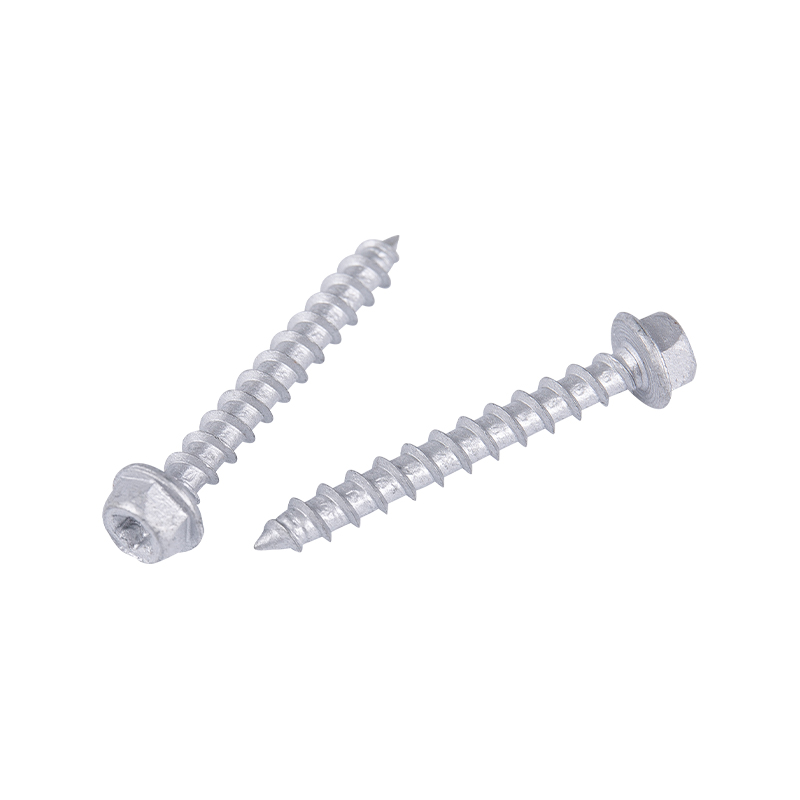
Wood screws are a type of fastener designed specifically for wood and are widely...
See Details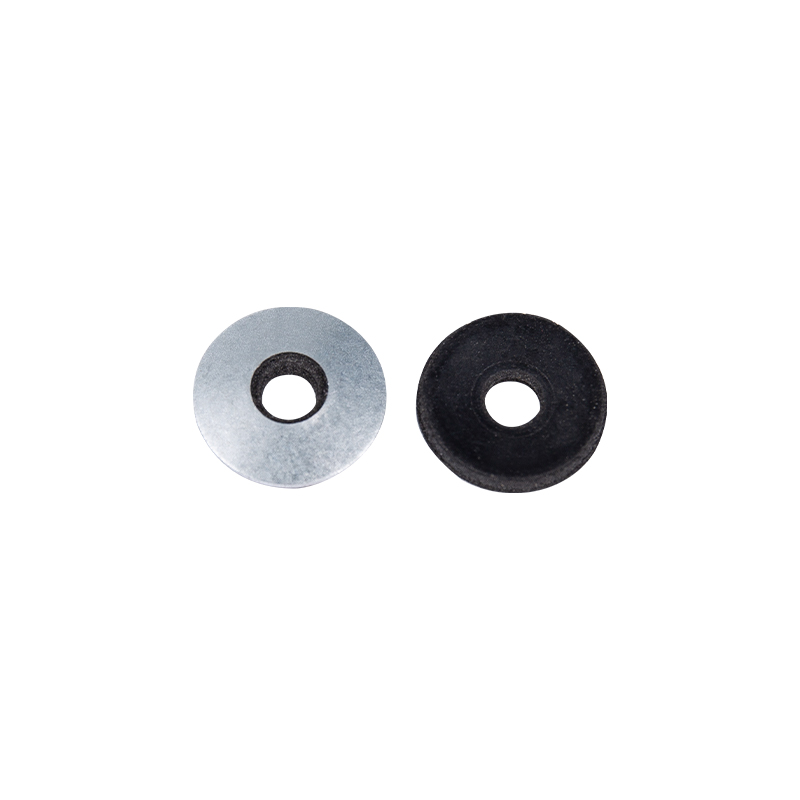
Monomer gaskets and conjoined gaskets are two types of sealing materials widely ...
See Details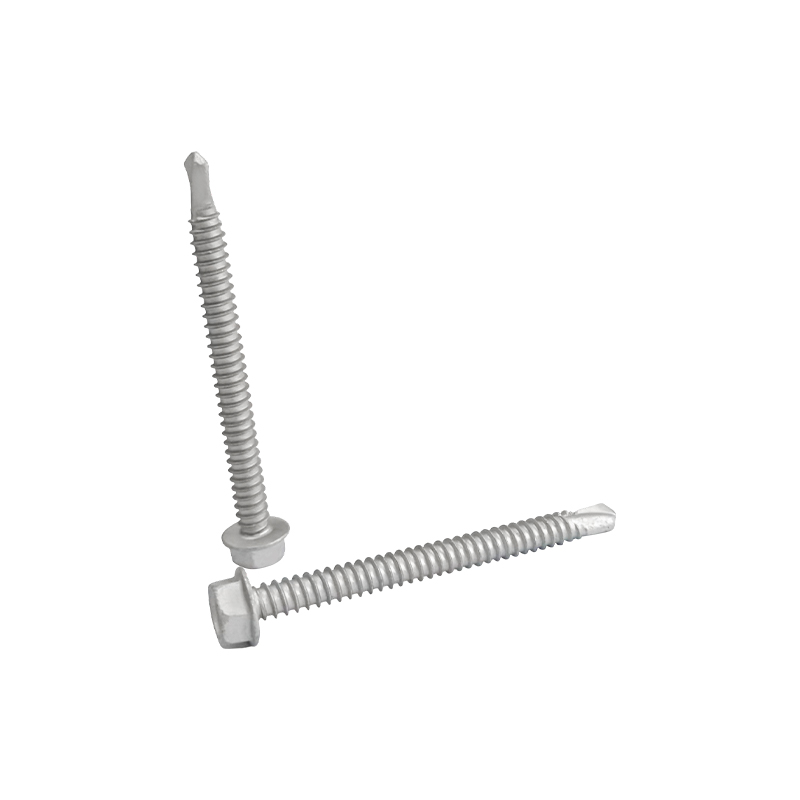
The Hexagonal Flange Self-Drilling Screw is a fastener featuring a hex flange he...
See Details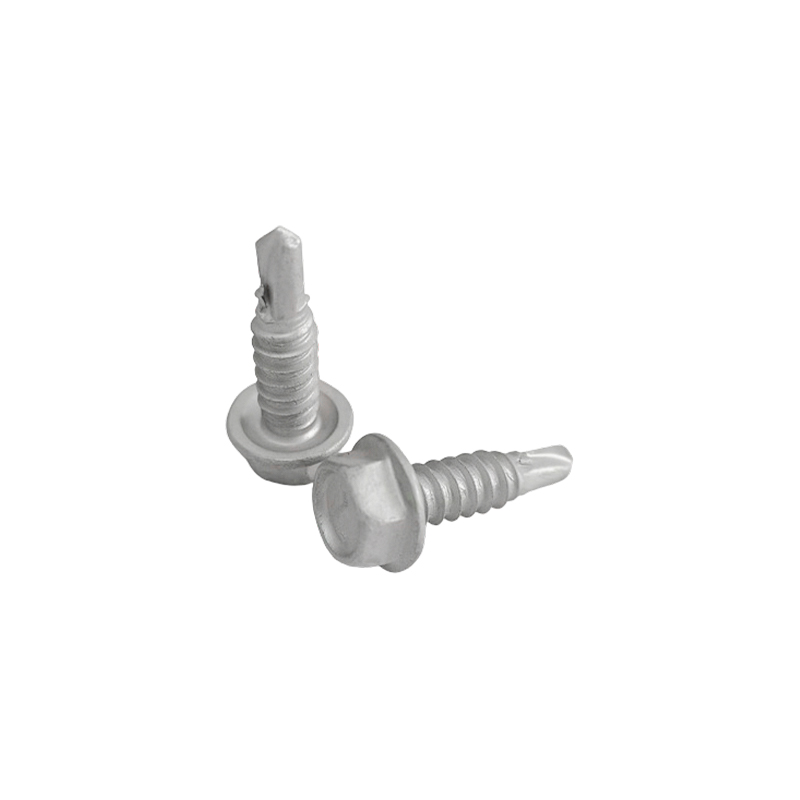
These hexagonal flanged stitching bolts are available in sizes from 1/4 to 14*7/...
See Details+86-13705735391
+86-18868359082
+86-573-83128088
+86-573-83128123
No. 2155, Shuanglong Road, Nanhu District, Jia Xing City, Zhejiang Province
Copyright © Jiaxing Zhongke Metal Technology Co.,Ltd. All Rights Reserved.Custom High Strength Stainless Steel Fasteners Manufacturers Provider